
Orange Juice
Your
quarterly
vitamin.
Written on 04/4/16 5:00 PM
RPM Creative Director Bob McCartney talks about Alter Brewing Company
by Bart Darress
Back in 1993, Mark Hedrick dabbled with his first batches of home-brewed beer made on a stove in his north side Chicago apartment. With plastic bucket fermenters and old bottles he cleaned out in his bathtub, Mark perfected his own take on various beer styles and flavors.
Fast forward to 2013, in the quaint suburb of Downers Grove, IL, two Chicago day-traders approach Mark with an idea. And after years of research and formal brewing education at Chicago’s Siebel Institute of Technology, the Alter Brewing Company was born.
More than a year later, Alter has found sure footing in the increasingly crowded craft beer industry. Competition is particularly intense here in Illinois with over 145 breweries in the Chicago area alone. Enter RPM Advertising. Bob McCarthy talks to us about marketing in one of the country’s hottest product categories.

OJ: Tell us how the Alter assignment came about?
McCARTNEY: Basically, Mark Hedrick was having these beer-tasting parties at his house in the suburbs – I think he called it the Shed Club. He invited friends and friends of friends who really loved beer. They all hung out in Mark’s backyard, tasting the different beers he’d made. One of the partners here at RPM was at one of these Shed Club parties.
OJ: The craft beer community is important to the Alter founders?
McCARTNEY: Definitely. It’s a real close-knit community. They share secrets and help each other out. It’s not fierce competition. It’s shared admiration for each other’s talent and success. They all just love beer. And they love talking about it, and of course, drinking it.
OJ: So over a few beers Mark hits it off with one of the partners and comes to RPM?
McCARTNEY: We all met at the RPM office, it was real laid-back. They simply said, “Make us a logo and some business cards. We want a brand.”
OJ: What were some of the issues facing Alter? Obviously, this was a lot easier said than done.
McCARTNEY: Absolutely. Craft brewing has literally exploded in the U.S. over the past decade. It’s easy to get started. The internet has given anyone who wants it a blueprint for brewing beer. Add more sophistication on behalf of the beer drinkers’ palate and the rise of entrepreneurship and home-grown business due to the economy, and you’ve got a crowded market all trying to get attention.
OJ: Who are some of the competitors in the Chicago craft beer market?
McCARTNEY: Well, the big players are Three Floyds, Revolution and Dark Horse. And older brew companies like Goose Island and Two Brothers. They’ve all done a fantastic job of grassroots marketing and exploiting the underdog, outside-of-the-mainstream position. Each has a distinct mantra, memorable look and personality.
-
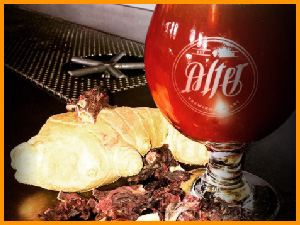
- Beer & BBQ
-
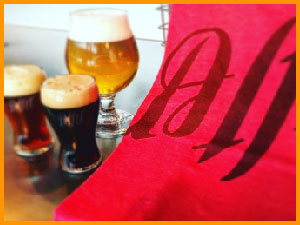
- Alter Pride
-
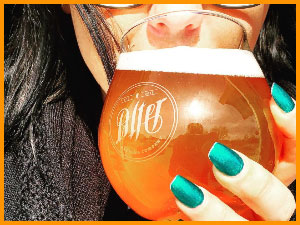
- Picture Perfect Summer
-
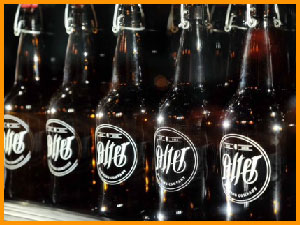
- Ready To Ship!
OJ: So how do they compete? What did your team do to help Alter stand out?
McCARTNEY: The Alter guys are really smart – they came to us with a pretty filled in vision for what they wanted. I mean, these guys are connoisseurs, beer junkies, beer-o-philes. But they really didn’t know what to do about the marketing.
At this time, the business hadn’t started, the taproom wasn’t going yet. And there wasn’t a lot of money. So we began with the name – it’s a really cool name! We wanted to do the kind of logo that would instantly brand the company and really set them apart.
OJ: How does a logo do all that in an intense segment like craft beer?
McCARTNEY: Think about it: The logo’s everything. It’s on the tap handle at the bar. It’s on the label. It’s going to be on the bottles eventually. And with craft beer, it’s all the consumer has to go on usually when he’s choosing what to drink. At the bar, at the store…
OJ: You said “he.” Who is the craft beer consumer in your mind?
McCARTNEY: Craft beer really took off with the rise of millennials. This group wants authenticity. They want edgy and real. It leans towards young men but honestly, craft beer enthusiasts can come in almost any age group, any race, men or women, rich or poor. It has more to do with a state-of-mind or passion for fine craftsmanship.
OJ: So you have a name. Where do you go from there?
McCARTNEY: Every designer in the place wanted to take a stab at this assignment. But first we got together and really thought about the competition, we talked out what the name meant, what kind of attributes we thought were important when designing… I mean, the whole brand had to come through this logo; it had to carry all the weight. It had to be a huge idea.
We went through literally hundreds of designs and showed about 20 to the Alter guys. They all landed on one in particular, almost immediately. And it wasn’t just about the logo, we presented our thoughts on what the name could mean.
OJ: So what was the big idea?
McCARTNEY: Alter your thinking, see things differently, there’s always more than one way of doing things, looking at things.
OJ: Which really plays into the logo you went with. Tell us about it.
McCARTNEY: It’s an ambigram – meaning, you can read it right-side up and upside down. It was honestly the very first thing that popped into my head when we were creating. The word Alter works perfectly as an ambigram. And when people find it, they’re blown away. We made stickers, coasters, lots of stuff and drinkers can’t get enough of it.
Word-of-mouth is probably the most powerful thing in the craft beer market. Have you tried such-and-such? Oh man, you got to try it! So the name, the logo became a calling card, an invitation to try the beer. And we knew that’s all it would take. The product is incredible. We just needed to get people saying and thinking the word, Alter.
OJ: Looking at the design, it’s very clean and simple. Why black & white?
McCARTNEY: The word Alter is always the focus. When designing, our buzzword was “simplicity.” We didn’t want to be trendy or wacky like some of the other brands. When we went to Binny’s (a local liquor retailor) we looked around at all the craft beer logos and labels, and we noticed something: Everyone was trying so hard to be different, trying so hard to be loud, to stand out… that it all became the same. We decided that simplicity, being clean and clever, made us stand out among all the crazy colorful, animated brands.
Plus, we didn’t want to break the bank. We wanted the look to be affordable and easily replicated in the future. We wanted that same simple look of the logo on the business cards, on the coasters, on the trucks, and on and on.
OJ: How do you take the history, the simple look and budget and market Alter in such a competitive industry?
McCARTNEY: Social media is the Alter weapon of choice. It’s a way to literally talk to their customers every day if they want. The company sends out updates and event info on Twitter and Facebook and followers and friends come based on that. It’s just incredible really, the taproom is jam-packed every night.
The idea is to market the brand just like the original Shed Club – friends of friends of friends come and taste the beer and so on. It’s the whole vision come full-circle, so to speak.
What we’re doing is building the Legend of Alter as we’re going. For example, on the back of the label we’re putting a little drawing of a shed and the number “93” for when it all started. We’re creating mystique and intrigue. We’re trying to use old-school tools that don’t cost much, setting up cool little things now that we can trigger later on. We’re always “altering” the brand to keep it vital so it connects with more and more drinkers.
Technology is moving faster than ever. Every day you can read a new article, report or blog about new advancements in technology. It looks like virtual reality (VR) is the newest development – and marketers are already looking to make a name with the early adopters of VR.

RPM team member, Mallory, tests out Google Cardboard
VR can be used for travel, games and much more. Google has already made their claim in the VR market with cardboard, literally. Google Cardboard is giving brands the opportunity to take this new technology into their hands with app creation and hands-on development with Google.
Google Cardboard is a simple transition into this new technology, and is already the masses’ introduction to VR. Google Cardboard does have its downsides. The DIY cardboard is simple to use, but has limitations. Matthew Schmidgall is a sr. motion graphics designer at RPM, and he described a quick onset of motion sickness while using the device. Moving from app to app is a challenge with the device too, because you have to take your phone out of the cardboard headset.
However, Matthew believes the price point is low enough that it will allow people to “experience VR who might not be able to afford it.”

Technology brands like Samsung have made a more sophisticated introduction into VR with the Samsung VR. The NFL brought the NFL Draft to Chicago in the spring of 2015. I had the opportunity to play with the Samsung VR and I was impressed. The NFL did not spare any expense in bringing their gaming experience to real life.
When I put on the Samsung VR I was put into the middle of an NFL game. I returned an NFL kickoff back for a touchdown, with all of the sounds and visuals you see on TV. I didn’t experience any motion sickness; however, the technology did seem a bit advanced with a large learning curve. And unlike the Google Cardboard, the price entry to experiencing the Samsung VR is much higher.
According to an eMarketer.com study, most users’ concerns about purchasing VR would be the price. Even though you can purchase Google Cardboard for as little as $5, it is no comparison to the Samsung VR. The next challenge for manufacturers of VR will be to find that middle ground of price and difficulty that can appeal to the masses. The barrier to target VR to different audiences may not be that difficult, with more than 64% of Baby Boomers saying they are interested in VR. Nevertheless, if price is still a major concern, it may be a few years before VR is a regular household item.

Every year new trends and technology arrive – some last, and some don’t. One thing is for sure, brands have a real opportunity to jump on the VR bandwagon now, before the competition. Maybe 2016 won’t be the year, but the rewards are apparent. RPM is here to help brands entertain their audiences and create experiences that are second to none. Next month we will explore the potential applications and examples of how VR is already being executed in the marketplace. With the launch of the Oculus Rift, we are sure there will be much to talk about.
There is a uniquely American destination that is both real and imaginary. It transcends the ordinary: Existing as an actual spot on the map and as an endless expanse in our psyche. Its name conjures images of soundstages and studios. Here, you’ll find movie palaces and stars of the grandest illumination.
The first tv spot, “Stars Everywhere” is driven by the memorable Motown hit, “Money, That’s What I Want” and features cameos from Hollywood’s Golden Age including Marilyn Monroe and Vegas icons Dean Martin and Sammy Davis, Jr.
Yes, there is an actual Hollywood, a neighborhood of Los Angeles, where this truly American industry was born. More than a century later, it’s touched most everyone around the globe, transforming a barren patch of land in the western U.S. into a mystical and intoxicating palm tree paradise.
But there is also the Hollywood of our collective imaginations. Nowhere else frees our fantasies and stirs the hopes and dreams of ordinary people like Tinsel Town. Nothing else compares to the adventures and eternal romances, the drama and intrigue of that single incomparable word – Hollywood.

It’s a place where life is bigger and brighter. Where an indescribable energy swirls among the glitz and showbiz glitter. This is where fame and fortune walk hand-in-hand. And anybody can be somebody in Hollywood. Just make the journey, and your dreams will surely come true.
This is the Hollywood that RPM Advertising wants to take you to. The new campaign for Hollywood Casino features iconic Hollywood legends and old-school Vegas cool in a fabulous place full of paparazzi, swirling klieg lights and endless glamour.
After months and months of testing and research, the agency landed on many of the campaign elements and a distinct strategic idea: We would connect the Hollywood of our collective imaginations with Hollywood the Casino. The campaign creates a destination where we can all escape, live the Hollywood life, and enjoy a little star treatment, even if it’s just for a little while.
Through television, digital, print, radio and outdoor, RPM continues to deliver their unique, own-able campaign – a new, contemporary vision of Hollywood’s Golden Age. The music, the footage and storytelling all come together in a world of gaming chic and Hollywood glamour.
It’s a Hollywood where everyone can live in the spotlight, a place where everything is larger than life: Look up and your name beams out from a towering marquee. Look down and glide across a sea of red carpets stretching off into the distance for as far as the eye can see.
Listen and you can almost hear the clicking cameras and the pop-popping of flash bulbs. It’s the unofficial soundtrack of Hollywood. And it calls them by the thousands, starry-eyed and star-struck, to a place where dreams are made. And fame is just a chance away.
 I like podcasts, a lot. From long-form comedic discussions on The Joe Rogan Experience to in-depth and captivating historical analysis on Dan Carlin’s Hardcore History, there are a thousand varieties of the growing network known as podcasting. Currently, podcasts replace all other forms of media (TV, terrestrial radio, etc.) in my life. After some forced, albeit needed, self-reflection, I estimate that I listen to around 5 hours of podcasts each and every day. And I’m not alone. Podcasts are no longer a novel sub-genre of streaming radio, but an entity all their own. So what does this rapidly expanding conglomerate mean for advertising? Are larger companies shaving their broadcast budgets and reallocating funds towards podcasts? While the once underground media outlet has broken into the mainstream, why is there such a lack of diversity when it comes to podcast advertisers?
It is important to first understand why podcast advertising is so successful. Unlike your traditional :30 spot in Dancing with the Stars, podcast advertisements are relatively unobtrusive (often worked into conversation in a comedic/entertaining fashion). Additionally, and possibly more importantly, podcast advertisements are almost universally host-read. Think about it, if an individual finds a podcast that he or she enjoys and is loyal to, they will also form a personal connection and loyalty to that podcast’s host. It’s inevitable. Advertisers have begun to capitalize on this loyalty and it is paying dividends. Even when these endorsement style ads stray from the script, hosts often times poke fun at the advertisers themselves, companies see a strong return on investment. Simply put, these advertisements don’t take themselves too seriously, they reach a very loyal audience and they don’t beat you over the head or interrupt your programming. Oh, and that loyal audience I mentioned, 67% of them fall into the much sought-after 18-34 demo, while an additional 36% of podcast listeners also live in households with incomes above $75,000 (only 25% of total population has household income over $75k).
 Podcasts are here to stay. However, like so many emerging technologies before it, podcasts were initially viewed as a niche outlet for those on the outskirts of mainstream media. While much of the general population has come around, traditional advertisers and organizations are still somewhat hesitant. A majority of podcast advertisers are mid-sized online product/service companies with a focus on direct response. Think Squarespace, Naturebox, Stamps.com, etc. It’s only fitting that those innovative and contemporary businesses would invest in an innovative, contemporary and evolving form of media (podcasts). Larger, non-direct response focused companies have only begun to dip their toe in the podcast pool, and understandably so.
Data and measurability are two vital components that often determine the success of an ad campaign and it is here where podcasts stumble. Impressions are almost exclusively gathered based on the number of times a podcast is downloaded. But what about those who listen to it live as it streams? And what about the listener that downloads a podcast and never listens to it? For podcasts to truly appeal to large brands, they must ditch data based solely on downloads and incorporate a mix of streaming data as well. From a media buyer’s perspective, setting up a meeting with a podcast representative to go over download data is out of the question. We media buyers need information and we need it fast. The measurability available on streaming podcasts allows media buyers to access information immediately and even gives insight into the listening audience’s behavior and patterns.
Like any emerging technology, podcasts are still ironing out the details when it comes to advertising and garnering advertisers’ interest. While podcasts have emerged from their humble beginnings as far as the general public is concerned, they still have work to do before Kleenex and Coca-Cola start investing. As podcasts continue to push a focus on clear and representative data (Triton just launched an ad platform for podcasts), media buyers and advertisers alike will begin to fall in line with the general public. It’s only a matter of time.

Not sure if you’ve been in a new car lately but driving one seems more akin to piloting the Millennium Falcon than any of the cars of our collective youth. Yes, there’s a steering wheel and a seat and a dashboard in simple terms.
But look closely. The steering wheel is a literal command center that has hardly anything to do with directing the car. Dashboards now come with operating instructions. You heard right, operating instructions.
Kidding aside, there’s so much about new cars that’s just amazing. They can park themselves, tell you where to go, and call you when it’s time for an oil change. Cars now have sensors for well, everything. A mechanic can plug into your car’s computer system and pinpoint any malfunction, no matter how tiny. And the new safety features on these cars? Wow.
Cars can now adjust your cruising speed based on the distance between you and the cars around you. They can brake for you if say, you’re fiddling with the cool sound-system and not watching the road. Backup cameras will alert you to unseen dangers, and on and on.
As great as it all is, the National Safety Council found that people may be relying on these systems a little too heavily. After all, if you know your car’s going to warn you of any impending doom, why would you pay real attention yourself?
A new website, MyCarDoesWhat.org highlights many of the new features that cars offer today. More importantly, it aims to educate drivers on how to be safe on the road.
When RPM Advertising pitched the business, it was clear that along with traditional media such as television and outdoor, digital media could vastly increase the chances of accomplishing the brand’s communication objectives. In order to influence and improve the driving public’s relationship with all the new automotive safety technologies, everything hinged on getting people to the website.
So instead of scolding bad driving habits or being too factual or informational, the idea was to disarm people and entice them with a wildly fun and irreverent online campaign.
Using a playful animation style and an incredibly infectious melody, the team at RPM wanted to get people singing along and sharing the video with friends. In time, the viral quality of the communication would be its major strength, creating a groundswell of interest and intrigue.
Although there are no fender benders or distracted drivers, the video uses metaphors such as ninja attackers and one-eyed Krakens to highlight all the crazy things that confront us on the road. The simple truth is that human beings are always the greatest safety feature in any car. And the new video from RPM aims to get the word out at the speed of the Internet. In the end, RPM was not awarded the business. However, the team remains proud of the strategy & creativity of the work presented including the online video, “Crazy World.”
Crazy World commercial from rpmadv on Vimeo. It’s been said that creativity is finding two unrelated things and putting them together. If that’s true, the more unrelated things you experience, the better your chances of finding those two things in the first place.
For sure, creativity is a funny thing. Even though there’s been tons of research and scientific dabbling into the creative mind, there’s no concrete answer as to why some people are more creative than others. There’s no evidence of a creative gene, so to speak.
But there are similarities or traits that these people share. This isn’t about people who happen to work in a so-named creative department. Because creativity is not reserved for some people. It’s not confined by what you do for a living or whether or not you possess certain artistic talents.
Creativity is everywhere. It can be anything. It can show up in a clever interpretation of the tax code or last night’s exotic casserole. That’s because creativity is a way of living your life. It’s a way of doing things. A unique perspective.
True creativity is the art of being curious.
So the goal of any organization or business should be to find these curious people. To fill out the roster with men and women who possess that never-ending sense of wonder and discovery. People who ponder the possibilities. Who like to tinker and dig. The ones who wander the psychic landscape and question the world at large.
These are the kind of people who get engrossed in science shows about the trade winds in Upper Mongolia. They’re fascinated by stories of ants that have somehow made a home on the 103rd floor of the Empire State Building. They search, they daydream and stare up at the night sky.
Because these are the people who will most likely find a cure for cancer. They’re the ones who put two and two together and find the formula for time travel.
In short, these are the people who see things differently than the rest. They bring a unique perspective and find new ways of doing things. They don’t want to tread on well-worn paths, they search for a new way through. More importantly, they’re extraordinarily keen to the odd occurrences and unforeseen opportunities that ultimately lead to our biggest breakthroughs.
Does the company president who runs to Michigan to cultivate a small farm make him more eager to grow the talent at his company rather than buying it out in the marketplace?
What about a media director who spends her precious time off searching the stars and planets as an amateur astronomer? Would that enhance her abilities to search the media landscape for the next great opportunity?
There are mail room guys who dabble in the stock market. CEO’s who spend their time making documentaries. Digital planners who build children’s playgrounds, rock ‘n roll accountants, IT racecar drivers, and on and on.
People who are curious about their world, who have hobbies and passions bring so much more to their everyday responsibilities. And the businesses where these people work will undoubtedly reap the benefits of their creativity.
5 things you can do right now to become a more curious person:
1. Be more ludic. The very next word you don’t know the meaning of, look it up. Go to an actual dictionary. Google it. Dictionary dot com it. Where did the word come from? Did you know that aposiopesis comes from the Greek word of the same spelling? It means to suddenly become silent as if from an inability to proceed. Or that ludic means to be playful in an aimless way? Cultivating a rich vocabulary is one of the greatest things you can do to grow personally and professionally.
2. Travel every day. Tonight on the way home, take a different path. Don’t take a cab, walk for a while. If you drive, go a different route. Instead of getting on the subway, explore a bit. There are so many things to see and do in our immediate little world. Did you know that record store was there? Pick up a vinyl copy of Some Girls by the Rolling Stones. Bronzeville is one of the oldest neighborhoods in Chicago – why is it called Bronzeville? Become more aware of the here-and-now. Be more present in your own life. The rewards are enormous.
3. Ask dumb questions. Find that childlike curiosity you once had. Be willing to ask anything about everything. Find the answers to things you always wanted to know but never bothered to find out. Questioning our world is how we grow. But somewhere along the way we become afraid to ask things. Most CEO’s agree that asking questions is what makes for great leadership. Smart leaders understand that the dumbest questions can be incredibly powerful. They unlock places we didn’t think to go.
4. Go bookstoring. Go to an actual bookstore and start picking up books and things that interest you. Encountering information that’s not specific to your goal or question is the fastest way to bump into serendipity. Innovation relies on unexpected collisions of knowledge and ideas. Bookstores are perfect way to crash into the unknown. The economist John Maynard Keynes once wrote, “one should enter a bookstore vaguely, almost in a dream and allow what’s there to freely attract and influence, dipping in as curiosity dictates.”
5. Do something weird. Be unexpected. Dress inappropriately. Eat something you think you don’t like. Talk to a stranger. Read some stereo instructions. Make a list of things you always wanted to do and do one of them. Go ballroom dancing alone. Read up on cat-rearing.
You never know where you’ll find curiosity. And that’s the point.
 Starting a personal brand is hard. How do you take who you are and translate that onto a blog, video series or any other form of digital media? It all starts with the details. Being meticulous and consistent can push your brand ahead by leaps and bounds.
Amy Schmittauer is the founder of SavvySexySocial.com and a popular YouTube blogger. Recently Amy spoke at Content Jam – a one-day content marketing conference about everything from SEO to content strategy. During her presentation she listed the steps to creating a successful YouTube channel. Let’s talk about three that you can use to push your brand forward on any platform: consistency, excitement and engagement.
Consistency. One word that can be the reason a brand fails or succeeds. Promoting a personal brand while having a family life, personal life and/or work life can be challenging. But sticking to a consistent schedule can be your brand’s saving grace. We are all creatures of habit, so getting your audience familiar with a schedule is essential. Whether it’s once a month or a week – be consistent.
Excitement. With so much content available online you have to be exciting. Nobody wants to read, watch or consume anything boring. What excites you? What excites your audience? How can you keep them wanting more? Your brand should please your audience. Are you teaching your audience something? How can you do it better than it’s been done? These are all questions you must consider when creating content.
Engagement. If your brand is consistent and exciting, people will be looking to learn more, comment and interact. Keep an active community if your audience reaches out to you. As Amy put it at Content Jam, “Listen. Respond. Benefit.” Pay attention to the comment section because you never know where it may lead you next. Your blog may start a conversation that reaches far beyond your expectations. Don’t limit your reach by not responding to comments – keep the conversations moving forward to engage and build a relationship with your audience.
Consistency, excitement and engagement are just the starting points to building a successful personal brand. The Internet is a limitless tool that can help catapult your brand to the next level.
Don’t limit your expectations and stick to your plan. You never know, you could be the next big thing.
 Often times, the really good story gets buried under a lot of science. We’ve dissected what words sell more, we’ve endlessly focus-grouped housewives 20 to 55, tested this music and that spokesman, all to divine the best ways to motivate a purchase.
But really, great advertising is the story of a brand.
Now more than ever, it’s a passionate conversation with the world about your product or service. This story just happens to be in increments of 30 seconds, 600×300 pixels, an 8- by 10-inch magazine ad, and so on.
The pieces and parts come together in one grand story that hopefully, people care about. If it’s done artfully, passionately, if it’s a story that really resonates with consumers, well, there’s really no limit to how far a brand can go.
When you think of products and companies like Progressive, Cheerios, Target, Nike and Apple, most of us know the colors they use, the iconic logos, we can even recite decades’ worth of taglines and copy. These brands have transcended the label of advertising and have become part of our culture. Part of our conversation. You hear people say things like, “Hey, did you catch that ad with the talking camel whooping it up about hump day? It’s hilarious!” Those are the stories that we tell and retell.
But you don’t have to be Geico to tell a good story.
Every brand has one. Whether it’s dramatic, hilarious, maddening, awe-inspiring or shocking, every brand has a truth to it, a center that feels right. That’s the place the best stories come from. That’s where you discover the tales, the facts, the jokes and experiences that make a brand unforgettable.
Of course, that’s the trick. The hard work, so to speak. Finding the heart and soul of a brand. And then bringing it to life in ways that connect authentically. Here are some good starting points:
- History lessons. Every brand comes from somewhere. There were people involved, they did things, there were trials and tribulations, and somehow, we’ve arrived at the brand you know today. The history of a product or service can be long and storied, or even an exciting new venture trying to get off the ground. Either way, history can be the stuff of legend. It can be fret with hardships that were ultimately overcome. The little-known moments that once illuminated, can really connect people to a product. Heck, they make movies about this stuff. Certainly, a brand’s history makes for good ads.
- The great creators. Just about everything we use and consume had some person at its core. At some point, a guy sat down and created the next great can-opener. Somebody was instrumental in making a fair-trade food store, the gripping-est paperclip, and the whitest-brightest toothpaste. Someone took two dark chocolate cookies, put some sugary white filing in between and squished them together. They shared their tasty invention with the world and today we have Oreos. Why did they do it? How did they come up with that idea? There’s a story there.
- It takes vision. Just as there’s usually some great person at the center of most companies, there’s always some grand vision or passion that drives most brands. At the beginning, there was some thinking that brought a product to life. Usually, someone’s great passion drives a product’s success. The deeply held belief in building the world’s safest cars has propelled the Volvo story for decades. If you can find the vision for a brand, or a mantra the product or service lives by, those strong values that drive a product can also drive its advertising.
- Customers in kind. Look at the people who use a brand. What are they like? What traits do they share? Are they all adrenaline junkies who go base jumping? Or do they all wear black leather and watch too much ‘Sons of Anarchy?’ Is there a shared reason for liking your product? Many years ago, a sneaker company looked at the athletic wear world and found that many had a “don’t just sit there, get off your butt and get going” attitude. In its shorter, more well-known form, “Just do it” became not only a brand story, but a religion people still live by today.
- Are you experienced? How people experience your brand can be a story, too. Some products really elicit a response. Just look at the internet. People like to talk about their experiences with products. Sometimes these are called testimonials. But these experiences can also lead to great storytelling. A radio station that advertises old, uptight and conservative people ranting about the music they play. Or a boot-maker that shows their customer’s mangled boots in order to talk about how their well-made shoes saved limbs and lives.
Even bad experiences can make a great ad.
It’s all in the storytelling.
 I’ve always thought that brainstorming is a creative approach that should span across an entire agency, not just the creative department. Now I am no expert in the science of brain creativity functions, but as a copywriter I can at least tell you what works for me:
Let Go. Not to get all “Namaste” on you here, but if you’re going to kick off your brainstorming process right, you’ve got to let go of whatever’s got you distracted from your A-Game. Yeah, that means letting go of resentment for the guy who accidentally shoved you on the EL this morning and didn’t apologize (apparently I’m still working on letting that go this morning). Everyone starts off the day with a few of these distractions, it’s only human; but you’re not going to be on your creative A-Game if those things dictate your attitude for the day. My method? Sucker-punch those distractions with awesomeness and a few hilarious cat videos and get those ideas flowing.
Take Some Time for Playtime. Whenever I make a little time for playtime during a brainstorm, I feel reenergized and more positive about new ideas. It could be a couple rounds of Pictionary with co-workers, a trip to the dog park, a lunchbreak workout…. Personally, I’m all about Legos. Anything that diverts you from staring at the bright lights of your computer screen is a good thing. But don’t overthink it, just play.
Throw in Some New Perspective. When you think you’re hitting a wall in the creative process, everyone always says that an outsider’s perspective is key. Now you don’t have to go out and poll strangers at a CTA station, but try pulling some inspiration from the people who sit around you from media folks to account managers to the HR posse—just because they’re not in the creative department doesn’t mean they don’t have fabulous ideas! And since you work together, they’ll probably have a good base understanding of the project so you don’t have to spend too much time explaining every detail off the bat.
Go Rogue. I feel like I’m going back to that “Namaste” stuff again by saying this, but I don’t care because I think it’s important—a positive environment is everything. When working on bigger projects, being surrounded by others under the same pressure can pull you into the hype. Skirt the hype and go take a walk, or maybe grab your notebook and work remotely from a park or coffee shop for an hour. Taking a brainstorm away from my desk gets me in a better zone, and there’s nothing wrong with going off the grid a little bit to jumpstart your creative process without interruptions.
Trust Yourself. Because you have good ideas in there, whether you know it or not. People sometimes fall under the impression they need to tailor their ideas to what a certain person in a meeting may think or how they might react, and to that I say IT’S A TRAP! When you do that, you’re telling your inner creative unicorn goddess (yes, that’s a thing and everyone’s got one) that it’s time to stop being awesome and take up a gig in horse carriage rides down Michigan Avenue. If that sounds extreme, that’s because it is. Setting limitations in creative concepting is a dangerous thing, and that’s why becoming comfortable with your ideas and trusting your thought process above all else is one of the most important aspects of brainstorming. Now be free, inner unicorn goddess. Be free!