
Orange Juice
Your
quarterly
vitamin.
Written on 09/22/16 8:08 PM
We can probably assume you know what Pokemon Go is by now. With over 25 million people walking around the country with their heads buried in their phones, yelling “woo!” every time they catch a mythical creature… there’s a pretty good chance you’ve been witness to the phenomenon. There will be roughly twice the number of Pokemon Go players today than people on Facebook. To say that the augmented reality-based game is a spectacular success is putting it mildly.
Really, it’s a screaming 200-decibel wake-up call for marketers and brand managers everywhere.

Think about it. We’re talking about a brand that’s over 20 years old. In their day, the original Pokemon cartoons spawned a rabid following of little kids who collected playing cards and Picachu dolls. It limped along on tv and in video game form for years and years.
Suddenly, someone has the brilliant idea to bring a decades-old cartoon franchise together with an existing location-based mobile game called Ingress (a sort of capture the flag for the digital world) and bam! We’re talking millions and millions of users around the world all interacting and participating in a brand that until recently existed mostly for young children and nerdy millennials.
Within days, this bit of digital genius has not only breathed new life into the brand, it’s creating an entirely new Pokemon universe that continues to move and grow as we speak. For anyone who doubts the tremendous power of the digital-social medium, imagine what 25 million new customers every day could do for your bottom line.
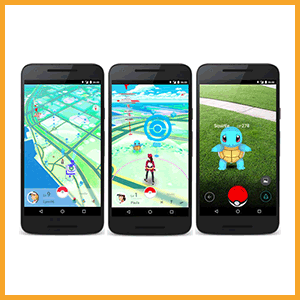
And all of it for the price of producing a moderately expensive 30-second tv commercial. For those marketers who are paying attention, Pokemon Go has offered some valuable lessons:
Branding is more important than ever. The platform that Pokemon Go is built on has been around for quite some time. The mobile game Ingress received scant attention when it was unveiled. Only after the Pokemon brand was added did it become a successful formula. Millions of people continue to connect with the game because it’s a story they know and are eager to re-experience. Even in the digital realm, cool games can only get you so far – an authentic brand story is still the heart and soul of any successful effort.
You don’t need a huge ad campaign. Pokemon Go didn’t use a single television ad to promote its introduction. The overnight success was built on the strength of its concept. The simple fun and nostalgia players experienced turned into millions of tweets and posts and endless word-of-mouth on social media. The simple fact is, you don’t need gobs of money to be an effective marketer. There are endless ways to connect with your customers nowadays.
Literally any brand can reinvent itself. Over the years Pokemon has constantly reimagined itself – from cartoons to toys to card games and video games. But connecting with the mobile platform finally gave fans an opportunity to live the Pokemon experience like never before. They could actually participate in the story of the brand.
The most obvious lesson of course, is that if you’re not already dedicating serious time and resources to the digital-social world, you’re very late to the party and it’s time to jump in head first. This new marketing universe offers unparalleled opportunity for igniting a groundswell of interest and excitement in your brand.
So start the conversation. Begin exploring your brand story. 25 million new customers are waiting.
What is Programmatic Advertising?
 Programmatic is the automation of buying and selling digital advertising inventory, including real-time bidding (RTB), that has seen tremendous growth over the past five years. It has started to transform how we buy and sell ad inventory. While RTB has historically been associated with remnant inventory, this technology is now increasingly being applied to a wider range of inventory. There has been confusion in the marketplace over terminology with a number of terms being used interchangeably such as: “programmatic,” “programmatic direct,” “programmatic premium,” “programmatic guaranteed,” and “automation”. Many definitions abound and they vary from site to site and from partner to partner. Additionally, marketers are bombarded with a lot of acronyms when referring to Programmatic, for example RTB, DSP, DMP, SSP, and many more. We will attempt to decipher and provide definitions for many of these key terms.
In simplistic terms, another word for Programmatic is Audience Buying because that this is essentially what advertisers are purchasing:
 instead of placements, they are purchasing Audiences regardless of where they may be browsing or surfing. The inventory is bought using algorithms, AI (artificial intelligence) and automated trading/bidding systems. At the core of Programmatic is the Ad Exchanges; they aggregate digital ad inventory from millions of sites and operate very much like a Stock Exchange. We’ll explore that in a later section.
The below graphic gives on overview of how programmatic is structured from the media agency side as well as the publisher side. Programmatic sits in the middle and makes decisions in real time as to how the inventory is bought and sold.
Why do we need Programmatic?
 With programmatic buying, advertisers have access to vast amounts of inventory, data, and targeting options. According to eMarketer, by 2017 83% of all display ad buys will be purchased programmatically. Magna Global predicts that US programmatic ad spending will hit $17 Billion by 2017.
Programmatic buying allows advertisers to target audiences in a multitude of different ways, below are the main options for targeting display, mobile or video ads:
In the future, most buying will be done via programmatic; not only for display ads but also for video, TV, audio, social and native. Buying in this manner actually saves money because of the efficiencies brought about by automation. However, costs can quickly escalate the more vendors and technology companies that enter into the mix. Each will get a cut of costs which can quickly add up.
The advantages are:

-
Economic Efficiency
-
Targeting
-
Organizational Efficiency
-
Measurement
-
Transparency
How does it work?

At the core of Programmatic is the Ad Exchange. Similar to the stock market, ad inventory on the Exchange is placed into a bid auction system where advertisers can bid on ads based on location, demographics, psychographics and a range of other criteria. The inventory options that are available go far beyond display ads including: Video, Mobile, Native, Social and Audio.
The graphic below demonstrates how all of these platforms and systems work together in a complex ecosystem that operates within milliseconds of an ad being delivered to a users screen. Both agencies and publishers are feeding in buys and inventory on either side. In the middle stands a system of Trading Desks (owned by agency holding companies), DSP’s (Demand Side Platforms), Ad Exchanges, Data Providers and Management Platforms (1st party and 3rd party), and SSP’s (Supply Side Platforms).
Definitions:
Trading Desk: large agency holding companies that have their own programmatic buyers that purchase directly from the Exchanges for their list of clients.
DSP (Demand Side Platform): enables advertisers to purchase ad inventory via RTB exchanges (examples are MediaMath, Turn, Invite Media, The Trade Desk)
Ad Exchange: a digital marketplace that enables advertisers and publishers to buy and sell advertising space, often through real-time auctions (Doubleclick, AppNexus, OpenX)
SSP (Supply Side Platform): a technology platform that enables web publishers to manage their advertising space inventory, fill it with ads, and receive revenue
DMP (Data Management Platform): provides the function of data collection, translation, classification, indexing and storage. In simple terms the ‘plumbing’ part of data-driven marketing online. (Oracle BlueKai, Neustar, Aggregate Knowledge)
Data Usage:
Programmatic buying allows the inclusion of many data sources to inform targeting and optimization decisions. It allows the buyer to show one ad impression to one anonymous viewer in one context. In the current programmatic landscape, the most common data used is leveraged on the buy side. Buyers layer both third-party data, as well as advertiser first-party data, onto campaigns. In addition, some publishers offer their first-party data.
Protecting against Fraud
Industry research has shown that an average of 55% of all digital display ads are not seen at all. This could be due to many factors: ad is below-the-fold and the user did not see it, fraudulent non-human traffic that comes through from bots or other computer programs.
Moving toward Viewability is RPM’s #1 priority moving forward and we are setting up systems to ensure that all of our advertisers are getting the highest percent of viewable impressions. Verification companies including 3rd party ad servers have viewability measurement built in to measure whether an ad is viewable or not on desktops or PCs. Mobile measurement will follow shortly but is not ready for primetime.
More and more high quality inventory is being made available programmatically like private marketplaces and publisher direct. By accessing this inventory, we can improve the quality of our ad placements and also improve viewability.
Programmatic Vendors

As you can see by the below Lumascape chart, there are an enormous number of players in the Ad Tech space. More come to market every day and also get acquired by other companies or change business models. Keeping up with the rate of change is very challenging, however, RPM keeps abreast of these changes by attending industry events, researching technologies and scheduling regular vendor meetings.
How is it Measured?
Programmatic buying can be purchased in different ways depending on campaigns goals. Below are the most common goal and cost structures:
-
Awareness: CPM or Cost-per-Thousand (used most frequently)
-
Performance: CTR (click-through rate), CPA (cost-per-acquisition), CPL (cost-per-lead), ROI
-
Viewability metrics by the 3MS (MRC, IAB, ANA and 4A’s) have established the following measurement standards to assess whether an ad is viewable:
-
Display: 50% of ad pixels must be viewable on desktop/PC for 1 continuous second
-
Video: 50% of ad pixels must be viewable on desktop/PC for 2 continuous seconds
-
Mobile: Viewable Impressions guidelines are currently being decided upon
Recommendation
Due to the enormous amount of inventory and opportunities Programmatic has to offer, it is an area for growth and exploration for all PNG properties. RPM is already working with Programmatic partners and has begun testing these vendors to determine reliability, volume and performance. We will continue to test new DSP partners to determine which ones fit our needs and comply with our quality standards. RPM is researching future opportunities for establishing its own trading desk using the latest technology with 100% transparency while also ensuring the highest quality inventory.
Next Steps
-
Viewability Approach
-
Determine and test new Programmatic partners
-
Share goals and objectives with new partner
-
Implementation
-
Shared Analytics
-
Evaluation